Comebacks for “You’re Not a Team Player” at Work – 25 Witty Replies
🎯 Quick Answer — the single best response:
“I play for the team’s success, not for the meetings about the meetings. There’s a difference.”
(Say it with a calm, confident smile. Deflects the label while affirming your actual contribution.)
You’re in a meeting, or maybe just walking back from lunch, when a coworker (or worse, your manager) drops the accusation: “You’re not a team player.” Your stomach drops. It’s a vague, loaded criticism that can mean anything from “you didn’t volunteer for extra work” to “you disagreed with my idea.” It stings because it questions your character, not just your performance.
The truth is, “team player” is often code for “yes‑person.” And not being one isn’t a flaw – it might mean you set boundaries, focus on results, or just hate unnecessary group chats. But you still have to respond. A defensive explosion will make you look guilty. A witty, professional comeback can disarm the criticism, clarify your value, and even make the accuser rethink their words. Below you’ll find 25 clever replies – from professional to playful to gently challenging – plus delivery secrets, email/text versions, and when to skip the joke and escalate to HR. Keep your reputation intact without becoming a pushover.
Peer feedback, passive‑aggressive coworkers, team meetings.
The comment comes from your boss in a formal review or HR is involved.
Moderate (requires calm delivery and emotional intelligence).
Deflect the label, demonstrate your actual teamwork style.
Why “Not a Team Player” Is Such a Tricky Accusation
In corporate culture, being called “not a team player” is like being accused of bad breath – it’s vague, embarrassing, and hard to disprove. The person saying it often can’t point to a specific behavior. Instead, they’re signaling that you don’t conform to their unspoken expectations. Maybe you didn’t laugh at their joke. Maybe you left a meeting on time. Maybe you finished your work efficiently without asking for help. The accusation says more about them than about you. Your comeback should calmly ask for specifics while affirming your actual collaborative wins.

The Best Comebacks (by Vibe)
I’ve split these into four categories: professional & clarifying, playful & light, gently challenging, and self‑aware. No outright insubordination – keep it clever, not career‑ending.
📋 Professional & Clarifying (best for most work situations)
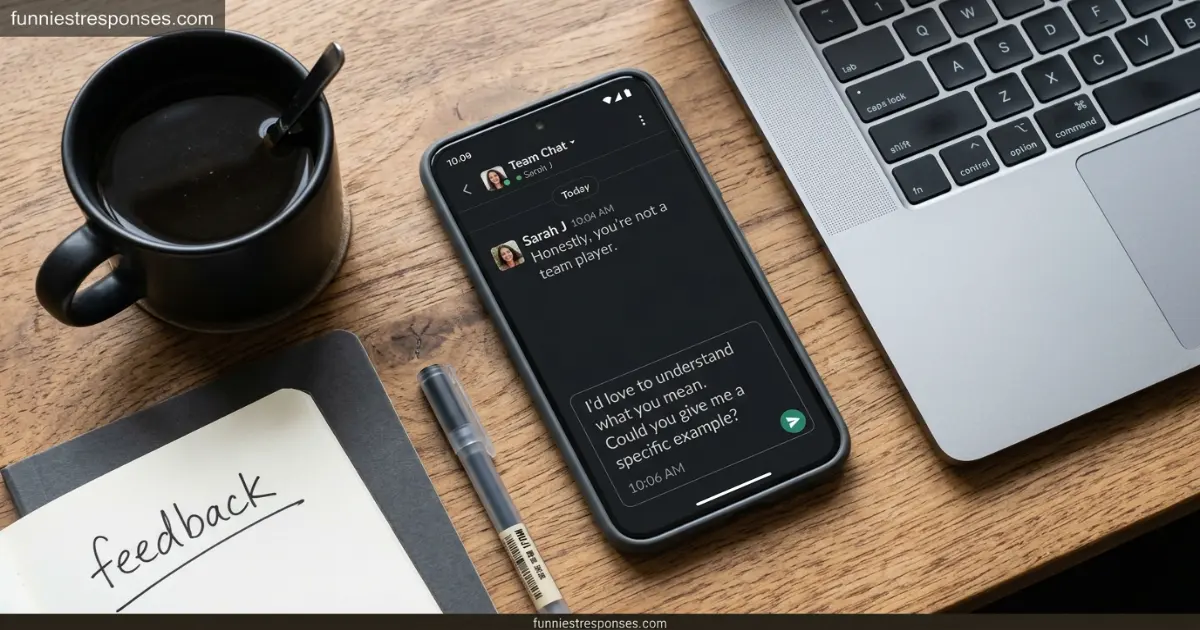
- “I’d love to understand what you mean. Could you give me a specific example?”
- “I focus on results over process. If that makes me not a team player, I’m okay with that.”
- “I collaborate when it adds value. I also protect my time for deep work. Both help the team.”
- “I’ve noticed you’ve said that a few times. Let’s sit down and align on expectations.”
😊 Playful & Light (for peers or low‑stakes comments)
- “I’m a team player – I just play a different position. Think of me as the designated ‘get things done’ forward.”
- “I play for the team, not the huddle. Results, not applause.”
- “I’m a team player who also believes in ‘healthy conflict.’ It’s in the agile manifesto. Look it up.”
- “My team playing style is ‘quietly carry the piano while everyone else argues about sheet music.’”
⚡ Gently Challenging (for passive‑aggressive repeat offenders)
- “I’d love to see the specific behaviors you’re referring to. Can we review them together?”
- “Team player doesn’t mean ‘always says yes.’ Sometimes the best team play is a respectful no.”
- “I’m curious – is this about my actual work, or about me not agreeing with you on Tuesday?”
- “I’ll take ‘delivers results’ over ‘popular in meetings’ any day. But happy to discuss.”
😌 Self‑Aware & Disarming (for when you want to lower the temperature)
- “You’re not wrong that I value independent work. And I also value the team – let’s find a middle ground.”
- “I can see how I might come across that way sometimes. Let me show you where I do collaborate.”
- “Fair observation. I’ve been focusing on X project. But I’m happy to loop in more. Where do you need me?”
- “I hear you. Can we reset expectations so we’re both clear on what ‘team player’ means here?”
Labels like “not a team player” are designed to make you defensive. By calmly asking for specifics or reframing the term on your terms, you take back control. Studies show that specific, behavior‑based feedback is 90% more useful than personality labels. When you ask “what do you mean by that?” you often reveal that the accuser has no concrete example – which makes their comment lose power. The playful responses use humor to defuse without submission, showing you’re confident enough not to take the bait.
| Comeback Type | Best For | Example Line | Risk Level |
|---|---|---|---|
| Professional & Clarifying | Bosses, formal feedback | “Could you give me a specific example?” | Very low – shows maturity |
| Playful & Light | Peers, low‑stakes comments | “I play a different position.” | Low (if delivered with a smile) |
| Gently Challenging | Repeat offenders, passive‑aggressive coworkers | “Is this about my work or not agreeing with you?” | Medium (know your audience) |
| Self‑Aware & Disarming | When you want to reset the relationship | “Let’s find a middle ground.” | Very low – invites dialogue |
How to Deliver These Lines (Office Diplomacy)
Delivery checklist for workplace comebacks
- Tone: Calm, curious, not confrontational. Lower your voice if needed.
- Face: Neutral or slightly friendly – never a smirk or eye‑roll.
- Body: Relaxed, open. Don’t cross your arms.
- Follow-up: After your reply, listen. If they give a real example, address it professionally. If they fumble, say “Let me know when you have something specific. I’m always open to feedback.”
Practice tip: Rehearse “I’d love to understand what you mean” in a mirror. Boring? Yes. Effective? Absolutely.

Email vs. In-Person vs. Slack: What Changes
Over email or Slack, the accusation “you’re not a team player” is even more loaded because tone is lost. Never reply with sarcasm in writing. Use the Professional & Clarifying category: “Thanks for the feedback. Could you share a specific example so I can understand better?” That’s professional, records your response, and puts the ball back in their court. In person, you can use playful lines with the right tone. In a group meeting, stick to professional – never challenge publicly unless you’re prepared for the fallout.
What NOT to Say (Career Mistakes)
These replies will backfire – often spectacularly:
- ❌ “Well, you’re not a good manager.” – Now you’re both insulting each other. HR nightmare.
- ❌ “I don’t care about being a team player.” – Confirms their accusation. Not a good look.
- ❌ “That’s not true. I did [list of tasks] last month.” – Defensive and whiny.
- ❌ Silence and a death glare. – Makes you look passive‑aggressive.
Also avoid bringing up ancient history (“Well, you missed a deadline in 2022”). Stay focused on the present.
Respond: “I appreciate you sharing that. I’d love to understand better. And just so we’re aligned, here’s where I see my teamwork adding value…” Then list two specific ways you’ve helped the team. Turns the criticism into a dialogue.
Real-World Scenarios (How to Handle Each)
Peer in a team meeting (vague accusation):
Peer: “Honestly, you’re not much of a team player.”
You: “I’d love to understand what you mean. Could you give me an example?” (calm, curious)
Result: They stammer or give a weak example. You’ve shown maturity.
Manager in a one‑on‑one:
Manager: “I’ve noticed you’re not really a team player lately.”
You: “Thank you for the feedback. I take teamwork seriously. Can you point to a specific situation so I can improve?”
Result: Your boss respects your professionalism and often rethinks the vague label.
Passive‑aggressive Slack message:
Slack: “Guess some people aren’t team players 🙄”
You (public channel): “I’m always open to feedback. Feel free to DM me specifics – I’d love to improve.”
Result: You look mature; they look petty.
When NOT to Use These (Serious Situations)
If the accusation comes from HR, your boss in a formal written warning, or during a performance improvement plan, do not joke. Say: “I understand the concern. Let me review the specific behaviors and address them.” Then comply or consult a lawyer if it’s unfair. Also, if you truly have been excluding teammates, hoarding information, or refusing reasonable requests, don’t deflect – apologize and change. Finally, if the person is known to be toxic and looking for a reaction, simply say “noted” and walk away. Protect your energy.
Related Reading on FunniestResponses
FAQs: Your “Not a Team Player” Comeback Questions, Answered
What if my boss says this in my performance review?
Don’t joke. Say: “Thank you for the feedback. Can we break down specific behaviors and create an action plan?” Shows you take it seriously without admitting vague guilt.
Can I use playful comebacks with my manager?
Only if you have a very close, informal relationship. Otherwise, stick to Professional & Clarifying. Humor can backfire with authority figures.
What if the person won’t give a specific example?
Say: “Without specifics, it’s hard for me to improve. Let me know when you have something concrete. I’m always open.” Then disengage – they’re just venting.
How do I reply in a group chat when someone says this?
Publicly: “I’d love to understand better. Happy to discuss offline.” Then take it private. Keeps you professional and avoids a public argument.
Is “team player” a code word for something else?
Often, yes – it can mean “agree with me,” “attend every social event,” or “don’t challenge the status quo.” Respond by asking for specifics to expose the vagueness.
What if I actually am not contributing to the team?
Then don’t deflect. Say: “You’re right – I’ve been struggling with [X]. Can you help me get back on track?” Honesty + vulnerability is powerful.
Can I use these if I’m a freelancer or contractor?
Yes – but add context: “I’m here to deliver results. If you need more collaboration, let’s clarify expectations.” Protects your boundaries.
📋 Your Cheat Sheet — Top 3 Comebacks for “You’re Not a Team Player”:
- “I’d love to understand what you mean. Could you give me a specific example?” – professional, disarming, gold standard.
- “I play for the team’s success, not for the meetings about the meetings. There’s a difference.” – playful but clear.
- “Team player doesn’t mean ‘always says yes.’ Sometimes the best team play is a respectful no.” – gently challenging and true.
Bonus line for Slack: “Noted. Feel free to DM specifics – I’m always looking to improve.”